For Pittsburgh homeowners planning a kitchen renovation, few design choices have as much visual and functional impact as your countertops. With so many stone countertop options available, understanding the differences in durability, maintenance, appearance, and cost is essential.
So, what are the different stone countertops, and which one is right for your home? Below, we break down five of the most common materials to help you make an informed decision.
Granite Stone Countertops
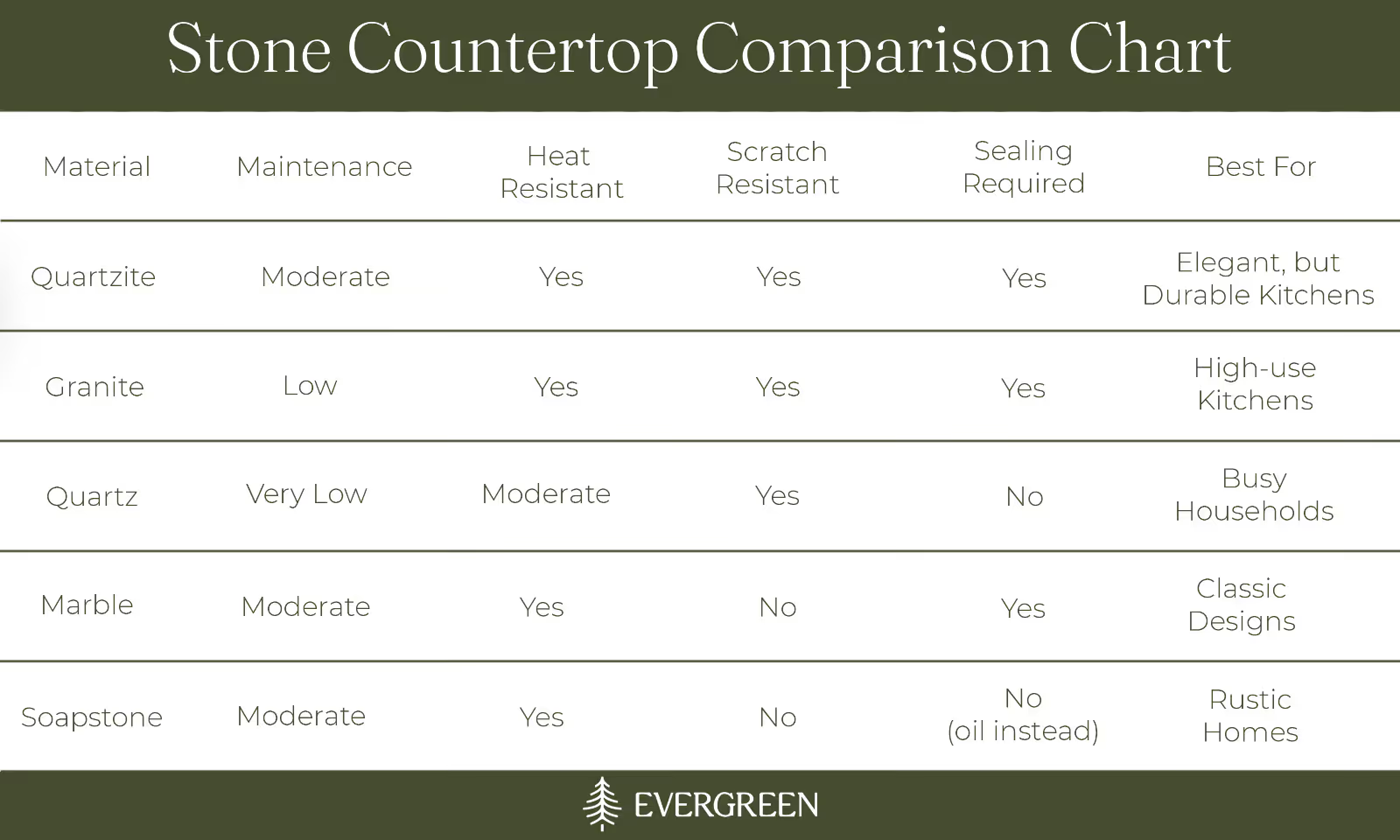
Perhaps the most popular stone countertop choice for kitchens and is granite. We used granite in our Sandalwood project, check it out here. Granite countertops are durable, heat-resistant natural stone surfaces that are available in a wide range of unique colors and patterns. Although generally low maintenance, granite countertops must be sealed annually to resist stains. Daily cleaning can be done with mild soap and water.
Granite countertops are resistant to scratches and heat, making granite an excellent choice for kitchens. Because granite is a natural material, every slab is unique, offering a high-end look with varying colors and patterns. Granite is typically graded into three levels (1-3) based on color, pattern, rarity, and thickness. Level 1 is more budget-friendly, while level 3 is more high-end, often rare designs, although the grading system is not regulated industry-wide. Below are some pros and cons to keep in mind when selecting a granite countertop.
Pros
Durability – Granite is extremely hard, heat-resistant, and scratch-resistant, giving the stone a long lifespan even in hard-working kitchens.
Availability – Granite is available in a wide range of colors, patterns, and finish options, meaning it works with nearly any kitchen design.
Easy Cleaning – Granite countertops are generally easy to clean with mild soap and water.
Cost – Compared to other natural stones granite offers a wide range of prices meaning you are more likely to find something that fits your budget.
Cons
Maintenance – Without a sealant granite is porous. Annual sealing is recommended to protect your investment from stains or bacteria forming.
Repairs Can Be Difficult – Although granite is often praised for its durability, repairing chips or cracks can be difficult. Some damage can be patched, some cannot. Either way, the fix will probably not match perfectly.
If you love the functionality of granite, but want something softer and more elegant, marble may be the right fit.
Marble Stone Countertops
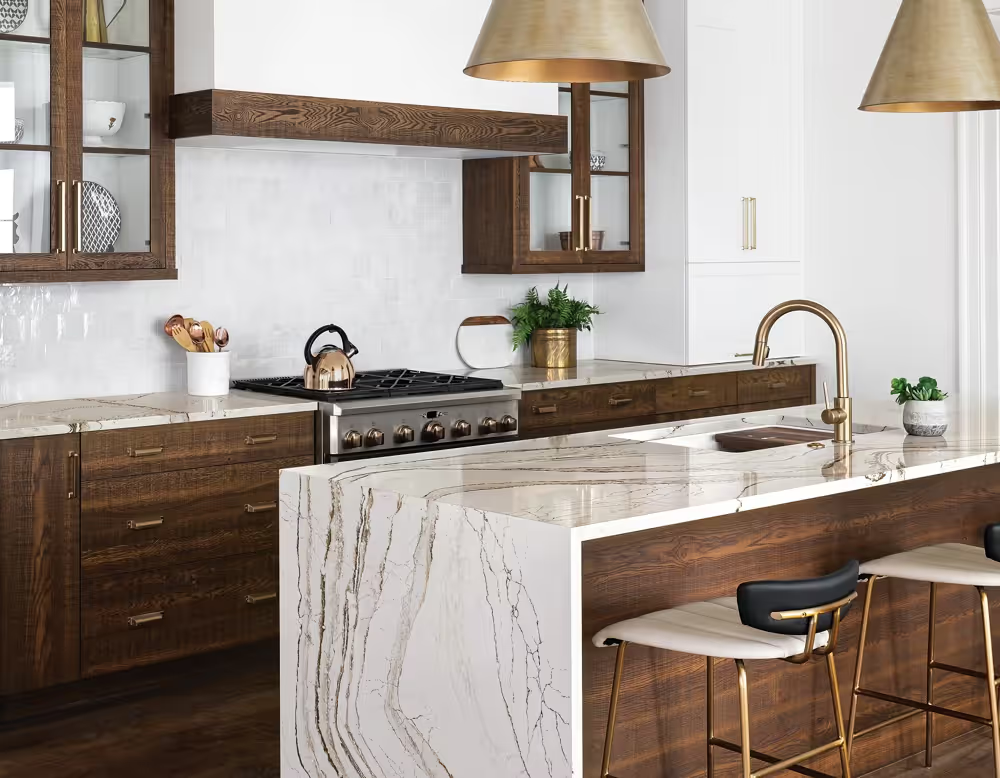
Marble countertops are a natural stone choice prized for their unique, elegant veining and cool surface, ideal for food preparation. They are a classic choice and often look best in traditional, timeless homes.
While durable, marble is considered a softer stone, making it susceptible to scratches, etching from acids (like lemon or wine), and staining. Marble stone countertops require regular sealing every few months to keep them from etching or staining.
Marble is a popular stone countertop option that has numerous pros and cons. We have listed the most common arguments for and against the stone choice below.
Pros
High end aesthetics – Each slab features beautiful, natural patterns.
Heat Resistance – Marble is known for its tolerance of high temperatures (although direct, extreme heat can still cause thermal shock).
Cool surface – Marble stone countertops stay naturally cool, which is ideal for food preparation, especially baking.
Value – This stone adds a high-end appeal perhaps more than any other natural stone and can increase a home’s value.
Cons
Porosity and staining – Marble is a more porous stone than granite, which means it absorbs liquids easily and requires prompt cleaning after spills.
Etching – Acidic substances like citrus juice, vinegars, and wine will dull the surface, causing “ghosting” in areas.
Softness – As marble is a softer stone than some other options, it is more prone to scratches, chips, and dents.
Cost – Although prices vary widely, marble is typically a more expensive stone option.
Marble is a beautiful stone but can easily patina over time. If you are worried about the maintenance of marble, quartzite might be a stone to consider.
Quartzite Stone Countertops
Quartzite is a premium, natural metamorphic stone that offers the elegant, soft look of marble, but with the superior strength of granite. Composed primarily of quartz, quartzite is highly durable, scratch and heat resistant, making it ideal for kitchen stone countertops. Like most natural stone options, it requires regular sealing to prevent staining.
Pros
Durability – Quartzite is harder than granite, making it highly resistant to scratches and chips.
Heat Resistance – Excellent at handling high temperatures, quartzite is an excellent choice for kitchen countertops.
Aesthetics – Quartzite offers a beautiful look with a bright crystalline appearance, similar to marble.
Cons
Maintenance – Being porous, quartzite needs to be sealed every 6-12 months to avoid moisture absorption and stains.
Etching – Despite its hardness, quartzite can be marked by acidic liquids, similar to marble.
Limited Colorways – Quartzite is typically only available in neutral tones like whites, grays and beiges.
If you are looking for something with more color options, but is still very low-maintenance, quartz might be the right choice for your busy kitchen.
Quartz Stone Countertops
Quartz countertops are an engineered stone surface offering a high durability and low-maintenance option, especially suited for busy kitchens. While offering consistent, modern, and varied design options, their main drawbacks include poor heat resistance, high cost, and unsuitability for outdoor use. Like natural stone options, quartz also requires professional installation and can have visible seams.
Pros
Durability – Quartz countertops stand out when it comes to durability. Engineered to be ultra heavy-duty, quartz will not crack, scratch, or chip easily.
Warranties – Since quartz is a manmade product, manufacturers will confidently offer long-term warranties for their product.
Low Maintenance – Quartz is engineered to be non-porous making it easy to clean and disinfect, as liquids do not seep into the countertop.
Cons
Susceptible to Heat Damage – Although quartz itself is heat-resistant, the resin that holds the particles together is not. When you expose a quartz countertop to heat, the resin will melt, resulting in discoloration.
Not UV Protected – Over time UV light will discolor and yellow the resins in quartz. This includes light coming through a window (although it will take longer).
Limited Variability – As a modern, manufactured surface, quartz countertops are often associated with contemporary styling. If you prefer a traditional or rustic aesthetic, a naturally occurring stone might be a better choice.
The final stone countertop option is a often overlooked choice, but soapstone has been used in kitchens for decades.
Soapstone Stone Countertops
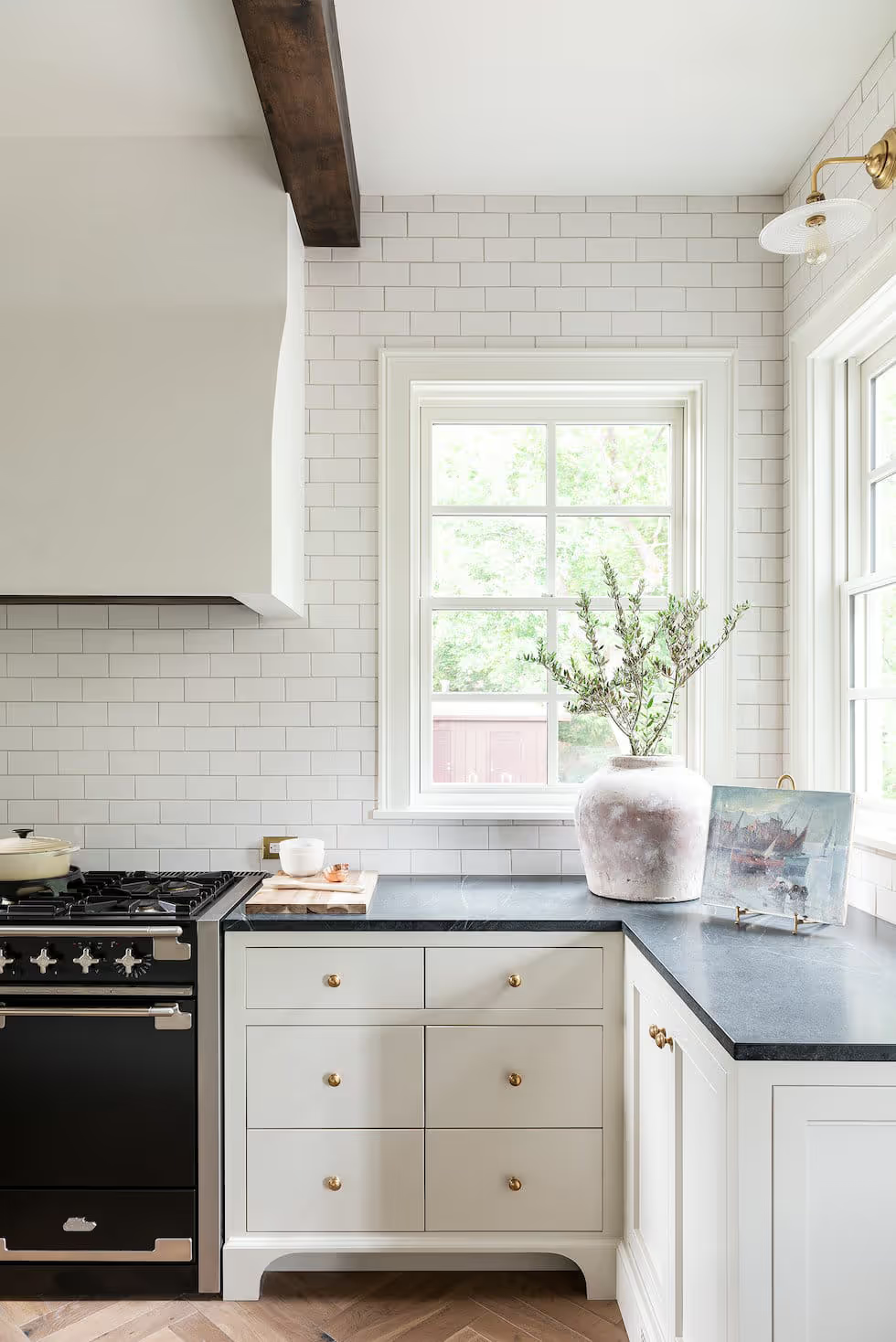
Soapstone countertops are a durable, non-porous natural stone that brings a timeless, matte, and sometimes rustic aesthetic to kitchens. Unlike other natural stones, soapstone countertops do not require chemical sealants. Additionally, they are naturally very heat resistant and easy to repair when scratched or dented. Soapstone is not maintenance-free, however, and requires a regular mineral oil application to achieve a uniform, darkened look. Soapstone is an excellent choice for home designs where a ‘lived-in’ patina look is desirable.
Pros
Highly Heat Resistant – As soapstone is a volcanic stone, it is naturally heat-resistant and you can place hot pots directly on it without damage.
Non-Porous – Being non-porous, soapstone does not require sealing, resists stains and does not harbor bacteria.
Easy Maintenance & Repair – As soapstone does not require sealing, scratches can be sanded down, and the stone can be easily oiled to hide wear.
Cons
Soft Surface – Soapstone is softer than other natural stones meaning that it is prone to scratches, dents and chips.
Limited Color Options – Soapstone offers far fewer color variations compared to granite, quartz or marble and is typically only available in shades of grey, black, and dark green.
Regular Oiling Required – Soapstone requires frequent oiling to maintain a dark, uniform color otherwise it can turn patchy and grey.
General Considerations When Choosing a Stone Countertop Material
Thickness – 3cm slabs are more durable than 2cm slabs, which often require plywood backing. Three-centimeter slabs are typically recommended for countertops, especially in kitchen applications.
Pitting/Marking – Higher-grade, more expensive stones usually have fewer natural pits and less porous surfaces, making them more durable.
Installation – All of these stone options are heavy and require strong cabinetry and professional installation.
Seams – Stone slabs are stunning, but they are not always cut to fit your layout precisely, which is when seams may be necessary. In most kitchens, seams are inevitable, and they must be kept in mind during your stone selection process.
Choosing the right stone countertop comes down to how you live in your space. Are you looking for low maintenance? A timeless luxury look? Maximum durability?
At Evergreen General Contracting, we guide Pittsburgh homeowners through every step of the renovation process – including material selection – to ensure your countertops not only look beautiful, but function perfectly for years to come.
.png)